Power, thoughtfully
transmitted.
Two planetary stages bring a 4:1 and a 5:1 reduction into one architecture. Packaging, reflected inertia, and manufacturability are considered together.
MOTOR → TRANSMISSION → OUTPUTWe’re building the actuators that turn
robotic intelligence into physical capability.
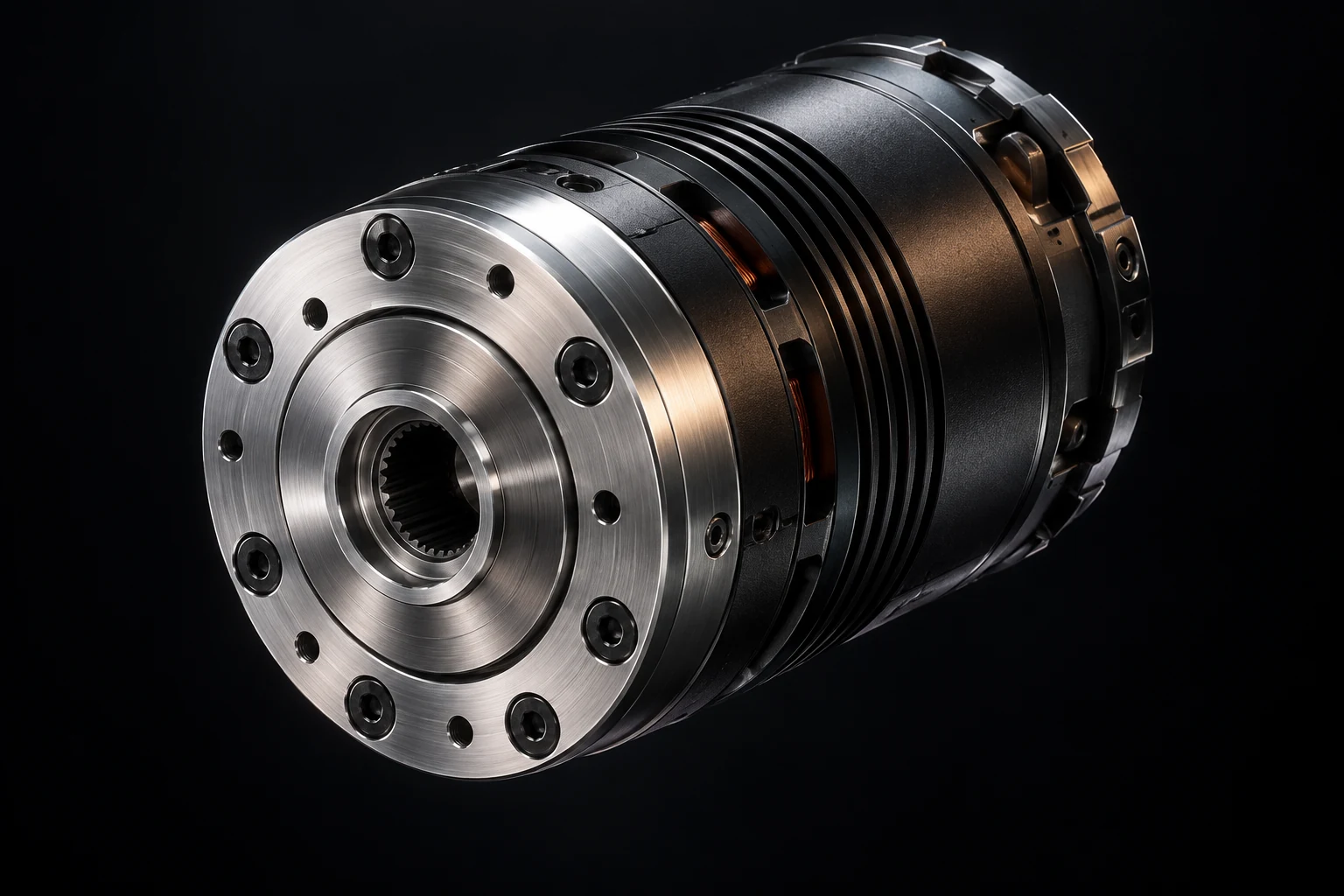 A20 / DESIGN VISION
Every movement begins at the joint. The A20 is our research platform for bringing the motor, transmission, and structure into one considered system.
Preparing the research assembly
76 modeled componentsComponents separated to reveal the nested architecture.
Original research geometry. Supplier motor geometry is included for context.
Concept imagery in the opening section is an artistic design vision.
Smarter robots need better physical foundations. We’re investigating how every part of an actuator can work better together—from the path of a load to the path of heat.
Two planetary stages bring a 4:1 and a 5:1 reduction into one architecture. Packaging, reflected inertia, and manufacturability are considered together.
MOTOR → TRANSMISSION → OUTPUTA direct stator-to-aluminum path puts thermal management into the structure. Sustained performance begins with understanding where the energy goes.
THERMAL PATH / STRUCTURAL INTEGRATIONConventional materials, clear assembly interfaces, and machining-aware geometry. Progress means a design we can manufacture, measure, and improve.
DESIGN → BUILD → MEASURE → REPEATGood engineering starts with explicit assumptions. These are the parameters of our current A20 investigation.
Download the research brief ↓| Architecture | Nested planetary |
|---|---|
| Reduction | 20:1 4:1 × 5:1 |
| Nominal design supply | 48 V Regulated bench bus |
| Maximum flange diameter | 144 mm |
| Modeled CAD mass | 4.85 kg Incomplete assembly |
| Modeled components | 76 |
| Development stage | Geometry & sizing |
R0 is an unvalidated research design. Loaded performance, thermal behavior, fatigue life, and manufacturing tolerances remain to be verified. No production availability or performance rating is implied.
Building a robot? Working on a demanding joint?
Let’s start with the problem you need to solve.